
Vancouver, CanadaBuilding IntelligenceFrom Science to Intelligence
CoolingIQ

Cooling systems.
Clearer intelligence.

AI-powered cooling performance intelligence. CoolingIQ connects energy, load and operating signals to help interpret deviations and support confident technical decisions.

ASYMMETRIC DYNAMICS / COOLINGIQ
Product preview

CoolingIQ in action.

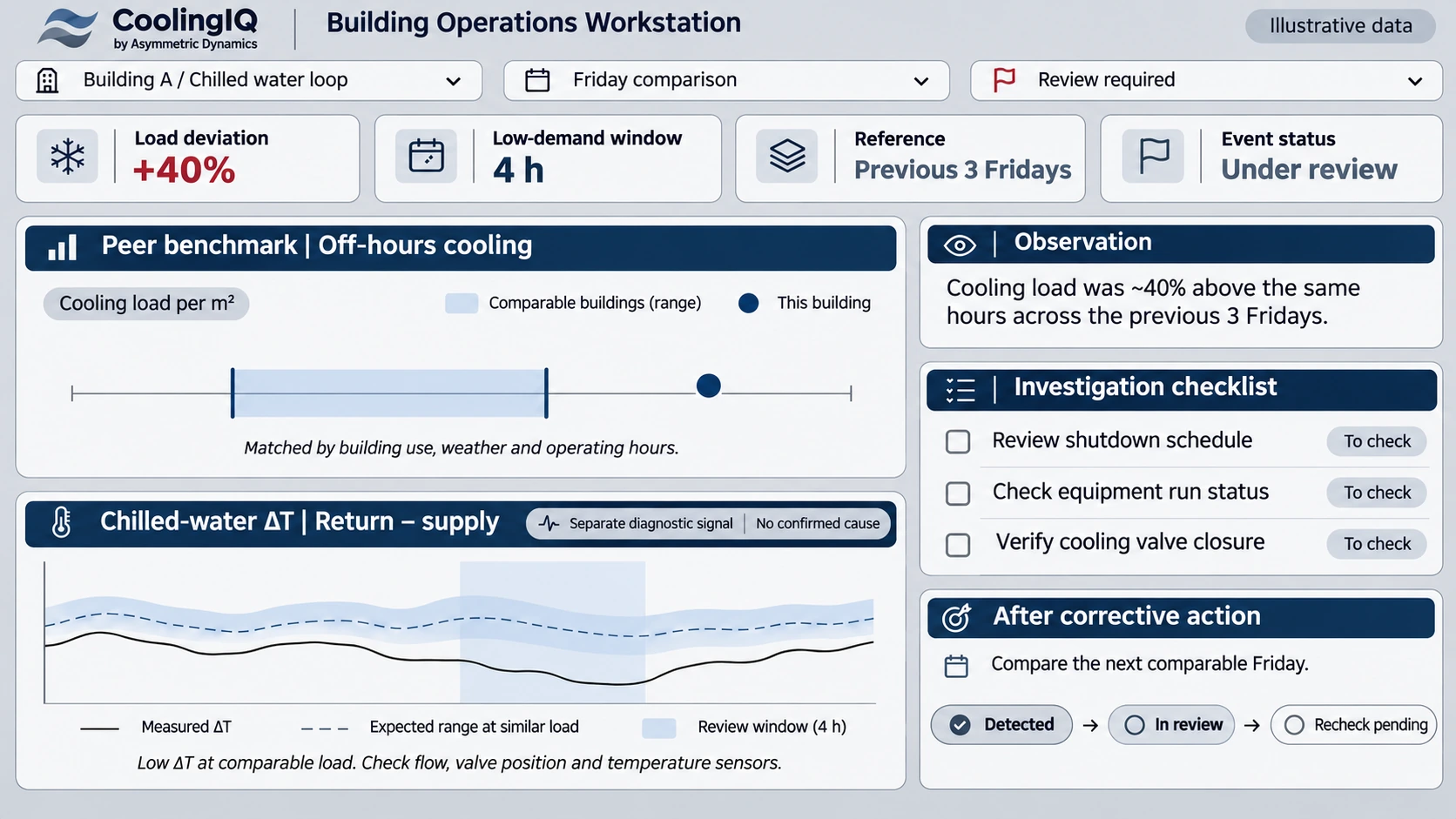
Illustrative CoolingIQ dashboard showing a cooling load alert, comparison with similar buildings, and chilled-water return-minus-supply temperature difference against the expected range.

In this example, cooling load during four low-demand hours was about 40% above the average for the same hours on the previous three Fridays. The dashboard also shows how the building compares with similar properties and flags low chilled-water ΔT for review.

Review the shutdown schedule, equipment operating status, and whether the cooling valve closes fully.

View full-size dashboard
CoolingIQ / Cooling performance intelligence

Understand the system.
See what changes.

Cooling performance is shaped by changing demand, environment and operating conditions. CoolingIQ helps turn complex signals into a clearer picture of performance and where focused attention could add value.

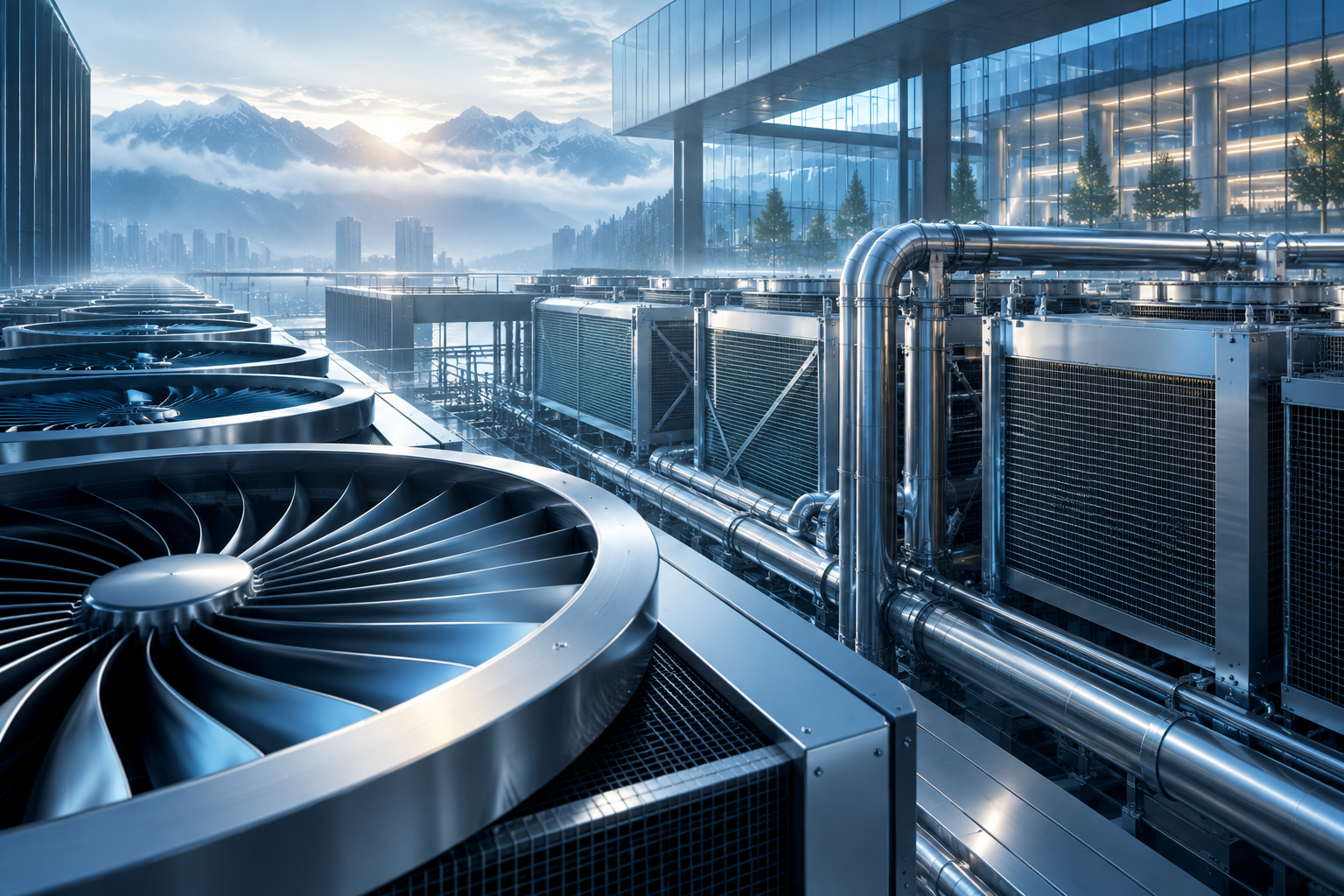
Architectural cooling systems with metal ventilation and heat-exchange equipmentCooling intelligence / AD-C
Two perspectives. One clearer picture.

Catch what changes.
Reveal what persists.

Not every cooling inefficiency begins with a sudden change. Some emerge unexpectedly; others remain hidden in everyday operation. CoolingIQ brings both into focus.

01 / Emerging changes

Spot issues early.
Act before the bill.

EARLY SIGNAL
Illustrative performance signal

CoolingIQ recognizes unexpected changes in an individual unit’s cooling performance as they emerge, helping teams investigate abnormal energy use before its impact becomes apparent on the next utility bill.

Timely awareness · Focused investigation
02 / Persistent gaps

Find inefficiency
that blends in.

SUSTAINED GAP
Illustrative peer performance comparison

A unit can operate consistently while using more cooling energy than comparable units. CoolingIQ highlights sustained performance gaps that may indicate underlying issues such as insulation, controls, equipment condition or operating practices—without assuming a specific cause.

Peer context · Chronic efficiency awareness
CoolingIQ / Chilled-water system efficiency

When flow rises,
efficiency can fall.

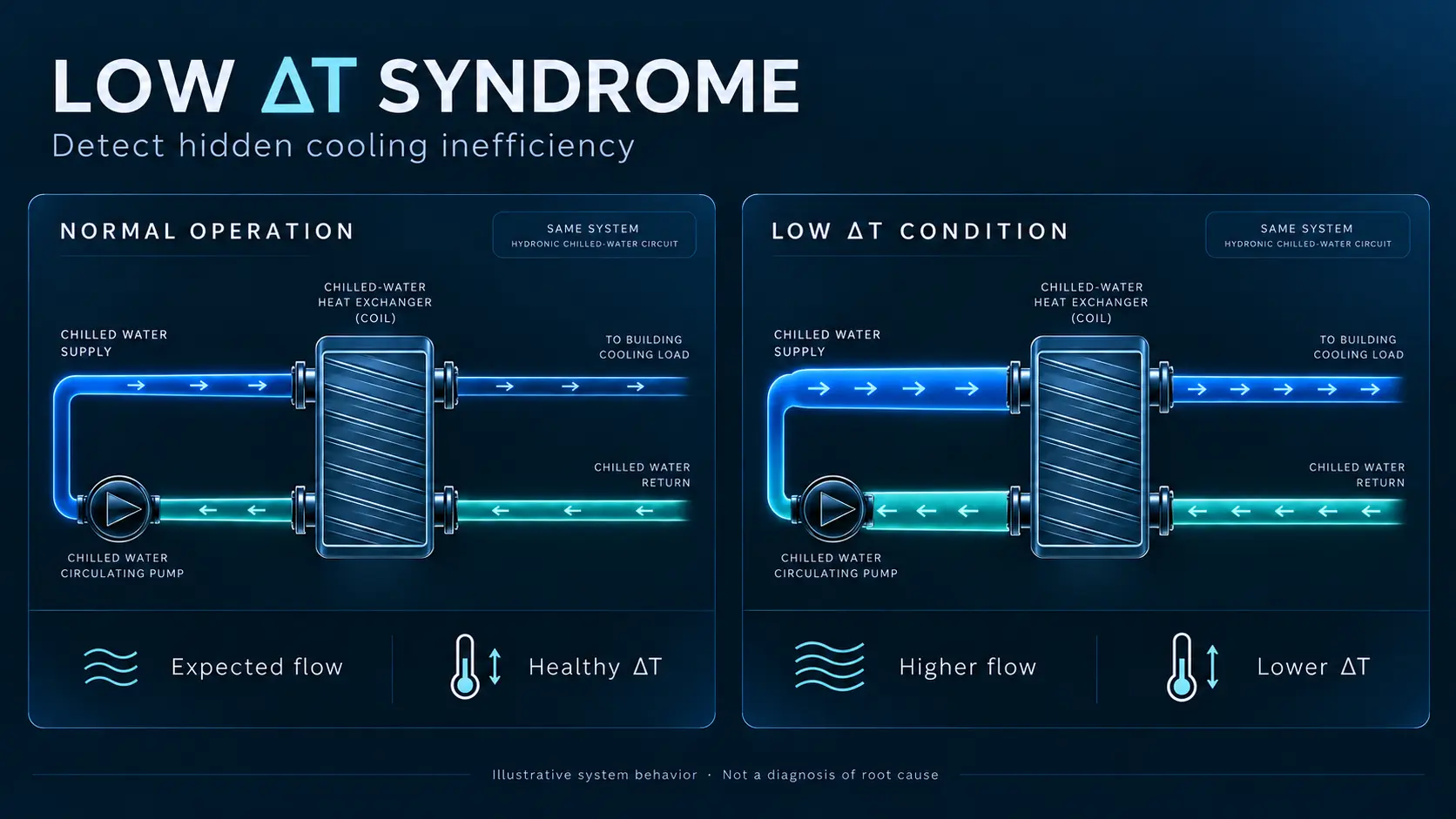
LOW DELTA T SYNDROME DETECTION

A chilled-water cooling system may continue meeting demand while circulating more water than expected. CoolingIQ brings attention to sustained low supply-to-return temperature differences and excessive flow patterns that could signal hidden system inefficiency.

Low Delta T Syndrome in an HVAC chilled-water system: normal water flow and healthy supply-return temperature difference compared with higher circulation and lower Delta T
Conceptual illustration of normal and low-ΔT chilled-water operation. Actual performance depends on system conditions and available measurements.
01 / UNDERSTAND

Read flow and temperature together.

Interpret chilled-water circulation and supply-to-return temperature differences in comparable operating conditions.

02 / RECOGNIZE

Surface sustained inefficiency.

Highlight persistent low-ΔT patterns that deserve technical review, even when cooling service appears uninterrupted.

03 / VERIFY

Watch for sustained recovery.

Support follow-up after investigation by checking whether performance returns to its expected operating range.

Low-ΔT detection identifies a potential efficiency concern, not a confirmed root cause. It is relevant where suitable chilled-water flow and temperature data are available.

The CoolingIQ perspective

Performance signals,
made meaningful.

From energy behaviour to operational exceptions, CoolingIQ frames system information around the decisions people need to make.

01 / CAPABILITY

Cooling performance analytics

Bring HVAC cooling energy, load and operating signals into a coherent view of cooling-system behaviour.

02 / CAPABILITY

Performance deviation awareness

Surface unusual cooling performance, changing patterns and conditions that warrant technical attention.

03 / CAPABILITY

Operational pattern intelligence

Make thermal, flow and system behaviour easier to interpret within real operating conditions.

04 / CAPABILITY

Data and sensor visibility

Highlight data gaps, metering inconsistencies and information that may require verification.

05 / CAPABILITY

Prioritized technical review

Organize observations into understandable priorities and suggested paths for investigation.

06 / CAPABILITY

Performance assurance

Support follow-up reviews to assess whether an intervention produced the intended operational improvement.

Built for complex operating conditions

Look beyond
individual readings.

Understand cooling behaviour through a wider operational lens, giving emerging deviations and possible causes the context they deserve.

CoolingIQ / Performance intelligenceIntelligence view
Intelligence layerCooling performance
Decision contextReview indicated
Energy performance patternsExpected / Observed
Performance deviation merits reviewContextual insight and suggested next-step investigation.
Illustrative interface concept · Not actual site or customer data
Operational intelligence journey

From performance
to assurance.

STEP 01

Observe

Connect cooling and operating information.

STEP 02

Understand

Surface performance changes and data-quality issues.

STEP 03

Investigate

Guide structured technical review and prioritization.

STEP 04

Verify

Examine observed outcomes after operational changes.

CoolingIQ / Questions

Insight with
operational context.

What types of cooling data are relevant?

Depending on the environment, relevant information may include cooling energy, flow, supply and return temperatures, operating context and other available system signals.

What is Low Delta T Syndrome in a chilled-water cooling system?

Low Delta T Syndrome refers to an unusually small supply-to-return chilled-water temperature difference. When paired with higher-than-expected water circulation, it may signal an HVAC cooling efficiency issue. CoolingIQ can highlight persistent patterns for investigation; it does not establish the precise cause.

Does CoolingIQ explain its performance assessments?

CoolingIQ is designed to accompany potential inefficiency assessments with the supporting observations, an estimated likelihood and suggested actions for technical review. The evidence informs an investigation rather than conclusively identifying a faulty component.

Does CoolingIQ replace engineering judgment?

No. CoolingIQ is designed to support engineering and operational decisions with clearer context, priorities and evidence.

Can the solution help assess interventions?

CoolingIQ includes an outcome-oriented review path for examining whether observed performance changed following investigation or action.

What does HVAC cooling performance analytics help explain?

CoolingIQ places cooling energy, load and operating changes in context so that deviations, data-quality concerns and priorities for technical review can be understood more clearly.

Can CoolingIQ integrate with a building management system (BMS)?

With appropriate data access, CoolingIQ intelligence can be delivered through API integration and displayed in existing smart-building platforms or dashboards. The integration scope is defined for each environment.

Move intelligence forward

Bring clarity to
cooling performance.

Explore how better visibility and intelligence can support the decisions behind your cooling systems.

Start a conversation